Sunday, April 11, 2010

The Shot That Divided A Country


April 12 . . .

The bloodiest war in our history (so far), the American Civil War was triggered by an event that happened this day in 1861. Fort Sumter, a government stronghold in South Carolina’s Charleston Bay, was attacked by Confederate forces under the command of General Pierre G. T. Beauregard. Three days later, President Lincoln issued a proclamation for 75,000 volunteer soldiers to help quell the Southern “insurrection.” By the time the war ended four years later, over 620,000 Union and Southern soldiers had given their lives.

Observe the occasion by watching one of the most monumental and compelling documentaries ever made: Ken Burns’ epic, “The Civil War”. Originally broadcast on PBS in 1990, ‘The Civil War’ is an exhaustive, meticulously detailed insight into the conflict. Thousands of rare photographs provide indelible images, and the voice-over narratives of various participants of the events – reading excerpts from letters, documents or journals – are profoundly affecting. A stunning achievement, and – at over 11 hours in 9 separate episodes - well worth spreading out over two evenings.

Wednesday, April 7, 2010

A BIRTHDAY YOU CAN'T REFUSE


April 7 . . .

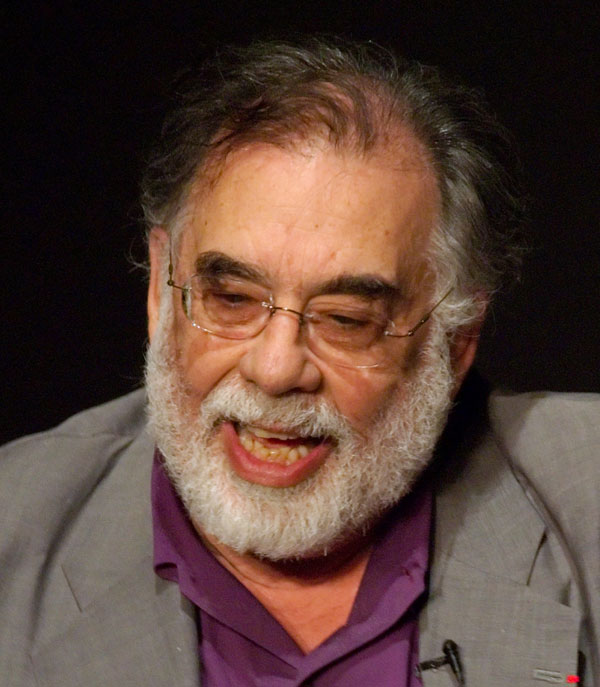
Happy birthday today to one of the great mavericks of modern cinema, Francis Ford Coppola, born on this date in 1937 in Detroit, Michigan. He filmed his first movie on an 8mm movie camera at the age of 10 after recuperating from a yearlong bout with polio. In 1962 he finagled a job as assistant director and all-around errand boy for the patron saint of all young filmmakers, Roger Corman. After directing a low-budget horror flick in Ireland, he directed his own light-hearted coming-of-age comedy, ‘You’re A Big Boy Now’ (1967). Hollywood took note and entrusted him to direct two films, ‘Finian’s Rainbow’ (1968) and ‘The Rain People’ (1969). Both flopped, and Coppola was on the verge of bankruptcy when he signed on to helm ‘The Godfather’ (1972), one of the biggest moneymakers ever. And one of the great roller-coaster directorial careers in Hollywood was off to an auspicious start.

Over the years, Coppola has directed some of the most audacious, daring and occasionally successful movies in the American oeuvre (‘The Godfather, Part II’ [1974]; ‘Apocalypse Now’ [1979], - and quite a few that paled, flailed and failed with audiences (‘One From The Heart’ [1982]; ‘The Cotton Club’ [1984]; ‘Gardens of Stone’ [1987]). But one of his greatest achievements is one of his most rarely-screened experiments, the brilliant, taut, and unsettling piece called ‘The Conversation’ (1974).

In one of his most complex performances, Gene Hackman plays Harry Caul, one of the top surveillance experts in the country, a deeply moral man in a deeply sleazy business who feels guilty about what he does for a living: Invading people’s privacy. When wealthy businessman Robert Duval hires him to trail his wife (Cindy Williams), whom he rightfully suspects of having an affair, Caul stumbles across a murder plot. All is not what it seems in the labyrinthine puzzle of a movie, which is not so much a thriller as a fascinating character study of a man who has misplaced his moral compass. Featuring Harrison Ford in a rare role as a heavy and the late John Cazale as Harry’s worshipful assistant. ‘The Conversation’ was one of the first – and still the best – of the paranoiac thrillers. The DVD features a riveting feature-length commentary by Coppola.

Tuesday, April 6, 2010

THE WAR TO END ALL WARS: TAKE 1


April 6 . . .


On this date in 1917, the U.S. formally declared war on Germany and entered into World War I. It was supposed to be the ‘war to end all wars.’

Observe the sober anniversary with one of the greatest antiwar films ever made, Lewis Milestone’s unforgettable ‘All Quiet On the Western Front’ (1930), based on the classic novel by Erich Maria Remarque. At the instigation of their gung-ho schoolteacher, seven German youths enlist in the army and go to the battlefields of WWI, their imaginations fired with visions of patriotism and glory. Stuck in the trenches and experiencing the horrors of war firsthand, they quickly see there’s no glory in it.

An emotionally wrenching film that has lost none of its power in the ensuing decades, ‘All Quiet On The Western Front’ is at once lyrical and gritty, graphic and shocking. Lew Ayres excelled with the performance of his lifetime as the naïve enlistee through whose eyes we, the audience, come to see the horrors of war. A masterpiece of film not only as an art form, but as a potent weapon – the kind of weapon that can give the word propaganda a good name. (The film was actually banned in the U.S. during WWII to discourage pacifism.)

Friday, April 2, 2010


April 3 . . .

Marlon Brando was born this day in Omaha, Nebraska, in 1924, the son of a father who was a traveling salesman and a mother who acted in community theater. There was a method to Marlon’s mumbling, and he grew up to become the single most influential film actor of his age.

Audiences had never seen anything like him. Positively primal, grunting and scratching himself whenever and wherever he happened to itch, Brando was compulsively watchable, projecting a raw sexuality that leaped off the screen. Think of the width and breadth of his range – ‘The Wild One’, ‘On The Waterfront’, ‘Viva Zapata!’, ‘Julius Caesar’, ‘Guys and Dolls’, ‘Teahouse of the August Moon’. He fell into slack performances throughout the 60s, but then had one of the great comebacks in film history as Don Vito Corleone in ‘The Godfather’ (1972), followed by the grieving middle-aged American in Bertolucci’s controversial ‘Last Tango In Paris’ (1972). They’re all monumental performances. You’ve probably seen most of them.

Every film buff is familiar with Brando’s much-touted acting acumen, but have you ever seen Brando’s sole effort as director? For a special change of pace, celebrate Brando’s birthday with the only film he ever directed and starred in, ‘One Eyed Jacks’ (1961). A fictionalized take on both Billy the Kid and the theme of betrayal, set in the Old West, it was originally slated to be directed by up-and-coming Stanley Kubrick, but Brando took the reins at the last minute; apparently, some of Kubrick’s footage survives in the final cut.

Brando plays bank robber Rio, who is double-crossed by his partner and surrogate father, Dad Longstreet (Karl Malden). Released from a Mexican prison after 5 years, Rio tracks down his old partner, now the sheriff of a small coastal town in California. Rio plots revenge and begins an affair with Longstreet’s daughter (Pina Pillicer).

‘One Eyed Jacks’ is a muddled psychological study but a fascinating cinematic Rorschach test into Brando’s bizarre psyche. (Naturally, he includes a mandatory whipping scene; Brando often took a sadomasochistic beating at the box office.) He had the inspiration to film his movie on the beautiful Monterey Peninsula, giving the picture a sand-swept, bleached-out ocean-spray ambience that his unusual in a Western. Gorgeously shot, uniformly fine acting (except for the miscast Pillicer), and far from your average shoot-em-up oater. A great supporting cast includes Ben Johnson, Slim Pickens, Elisha Cook, Jr. and the always interesting Tim Carey.

Click here for a taste of 'One Eyed Jacks' . . .

http://www.youtube.com/watch?v=Q2x_Xhjofww

TAKE THIS DETOUR


April 2 . . .

It was a day pretty much like every other day in los Angeles in 1965. Spring was in the air but who who could see it through the smog and what difference would it have made anyway? Washed-up Hollywood B-movie actor and never-quite-star Tom Neal had fallen on hard times, living in a cheap dilapidated apartment, and all the days looked the same. His reputation for hard living and hard drinking had made him virtually unemployable in the industry. On top of all that, he was paranoid and suspicious that his wife, Gail, was having an affair.

The story that he later told police was that she had tried to kill him and the gun went off accidentally; the prosecution’s version of events was that he had shot her in the head while she slept on the couch. Strangely, the gun itself had vanished. Either way, accidentally or on purpose, on this day in 1965, Tom Neal killed his wife, along with whatever chance he had for a future.

The irony was thick. Years before, he gave one of the all-time great film noir performances as a down-on-his-luck drifter who meets one bad dame too many, gets a bad hand dealt him, and who accidentally kills his lover in the movie many consider the greatest film noir ever, the classic ‘Detour’ (1946). B-movie director Edgar Ulmer, working on a poverty-row budget, created a bleak, bitter, compelling masterpiece on the vagaries of fate. Neal is appropriately dim as the luckless hero, but it’s Ann Savage (an appropriate name if there ever was one) who steals the show as the brassy bitch Neal picks up hitchhiking in California. All in all, ‘Detour’ is an amazing movie, drenched in the darker hues of human nature; like watching a bad traffic accident, you’re compelled to look.

Neal, sentenced to 15 years for manslaughter, was paroled in 1971, but died August 7th, 1972. In a typical piece of Hollywood stunt-casting, his son, Tom Neal, Jr., played his old part in a 1992 remake of ‘Detour’. He hasn’t been heard from since. Like father, like son.

Click here for a clip from ‘Detour’ . . .

http://www.youtube.com/watch?v=jkwETw6mZ6k

http://www.youtube.com/watch?v=maW4nFWyvz0

Wednesday, March 31, 2010

MAKE A FOOL OF YOURSELF


April 1st . . .


April Fools’ Day, for those of you with a yearning to pursue meaning behind meaningless things, probably derives from a change in the calendar year about 500 years ago. Before 1564 it was traditional to honor the new year with a solid week of partying, but the calendar was different in those days – the new year began on March 25, and the biggest celebration fell on April 1. 1564 marked the first year in which the first day was January 1. People who forgot the new day for celebrating were called ‘April Fools’. Over the years, the date has become the traditional day of playing practical jokes on unsuspecting victims.

Celebrate the occasion with a film oddity that is right in the spirit of the occasion – Orson Welles’ last completed film, the witty, mischievous and little-seen ‘F For Fake’ (1975). In 1977, Clifford Irving managed to publish The Autobiography of Howard Hughes, a splendid hoax that he perpetuated on the entire world. He may have gotten the idea from his next-door neighbor, a masterful art forger named Elmyr de Hory – a man who could fake a Picasso so accurately that it fooled the artist himself. Welles, no stranger to trickery (he began as a magician, and his famous ‘War of the Worlds’ radio broadcast was one of the great pranks of all time) pieced together this fascinating rumination on trickery using existing footage of both Irving and de Hory, as well as shooting new footage himself. The result is one of his most entertaining films – a wonderful sense of mischief pervades the whole beguiling movie. And yes, there’s an April Fools’ joke – but I’m not giving it away. Discover it for yourself. (Hint: Keep an eye on your watch . . . )

Can’t find ‘F For Fake’? As a standby, consider ‘The Game’ (1997), director David Fincher’s original and stylish Rubik’s Cube of a movie starring Michael Douglas as Nicholas Van Orton, a millionaire investment banker whose estranged brother (Sean Penn) gives him a birthday present that is more than meets the eye. Soon Van Orton’s world is turned upside down as he tries to figure out what the game really is, if he lives long enough. Clever screenplay by John Brancato and Michael Ferris.

Click here to see the original 9 minute trailer for 'F for Fake' . .

http://www.youtube.com/watch?v=FNyvg4s3YMA

Thursday, March 25, 2010

A CULPABLE TALENT


March 25 . . .

Damn.

I read the paper this morning and saw the news that Robert Culp had died at age 80; apparently, he took a fall while on a walk.

Robert Culp was one of the most underrated actors, writers and directors ever to contribute to the small and large screen. He was never really given the credit he deserved, and he deserved a lot.

He’ll probably be best remembered for his role as tennis bum-cum-espionage agent Kelly Robinson in the TV series, ‘I Spy’, which ran on NBC from 1965-1968. The series set several precedents – deftly mixing humor, exotic locales, adventure and drama – but its greatest influence was probably in the inspired pairing of Culp and costar Bill Cosby as Kelly’s partner, Alexander Scott. The two partners had a singular chemistry together, nonchalantly tossing witticisms back and forth like hot potatoes, and basking in a relaxed repartee that was contagious to viewers. Cosby won an impressive two Emmys for his work on the series, and always acknowledged Culp as his mentor and teacher.

As an actor, Robert Culp made it look easy; he could vacillate between cocky self-mocking assurance and intense Method-school angst, sometimes within a single scene. His easy charm tended to mislead audiences into labeling Culp as a ‘lightweight’ actor, but he could mine a real depth when called upon to – and he was usually the only one who did the calling. He co-created ‘I Spy’, writing and directing several of the best episodes, and was justly proud of his accomplishments. ‘The Man From U.N.C.L.E.’ may have had the ratings and the press in its day – but ‘I Spy’ had the depth, class and production values that ‘U.N.C.L.E.’ could only aspire to. Seen today, ‘U.N.C.L.E.’ is clunky, cheap and anachronistic; ‘I Spy’ is fresh, surprising and, more often than not, substantive.

Culp and Cosby addressed the prickly issue of pairing an African American with a Caucasion on TV as equals in the 60s by simply not acknowledging it – a low-key but revolutionary attitude that had a huge influence on the medium afterward, not least in Cosby’s own subsequent series.

After the ‘I Spy’s demise, Culp went on to tread water in movies that never really took off. His biggest box office hit was ‘Bob & Carol & Ted & Alice’, a now-antiquated comedy on sexual mores of the 60s. In 1972, he reunited with Bill Cosby to star in, write and direct the rarely-seen film noir ‘Hickey & Boggs’. Audiences that came expecting a re-birth of the camaraderie of ‘I Spy’ were disappointed; ‘Hickey & Boggs’ was dark, violent and pessimistic. It flopped at the box office, and pretty much spelled the end of Culp’s creative contributions.

He scored a few roles in mediocre pictures, never really tapping into his talents. He did contribute memorable turns in a few episodes of ‘Columbo’ (along with fellow TV auteur Patrick McGoohan), and had a supporting role in the otherwise dreadful series, ‘The Greatest American Hero’, but his days as a mover and shaker in the industry were over. He could occasionally be seen in undemanding guest appearances (‘Everybody Loves Raymond’, ‘Cosby’, etc.) – it was easy to conjure the old charm. He also appeared in an ill-advised 1994 ‘I Spy’ reunion TV movie with Cosby (now top-billed), which failed to capture the quirky chemistry or irreverent wit of the original.

‘I Spy’ was issued a few years back on DVD – in pristine prints that seem like they were filmed yesterday. Pick one up today and watch an episode or two, and savor the ‘wonderfulness’ that was Culp and Cosby together.

Here's a clip of Robert Culp talking about 'I Spy' . .

http://www.youtube.com/watch?v=v_qTbBgHrK8